
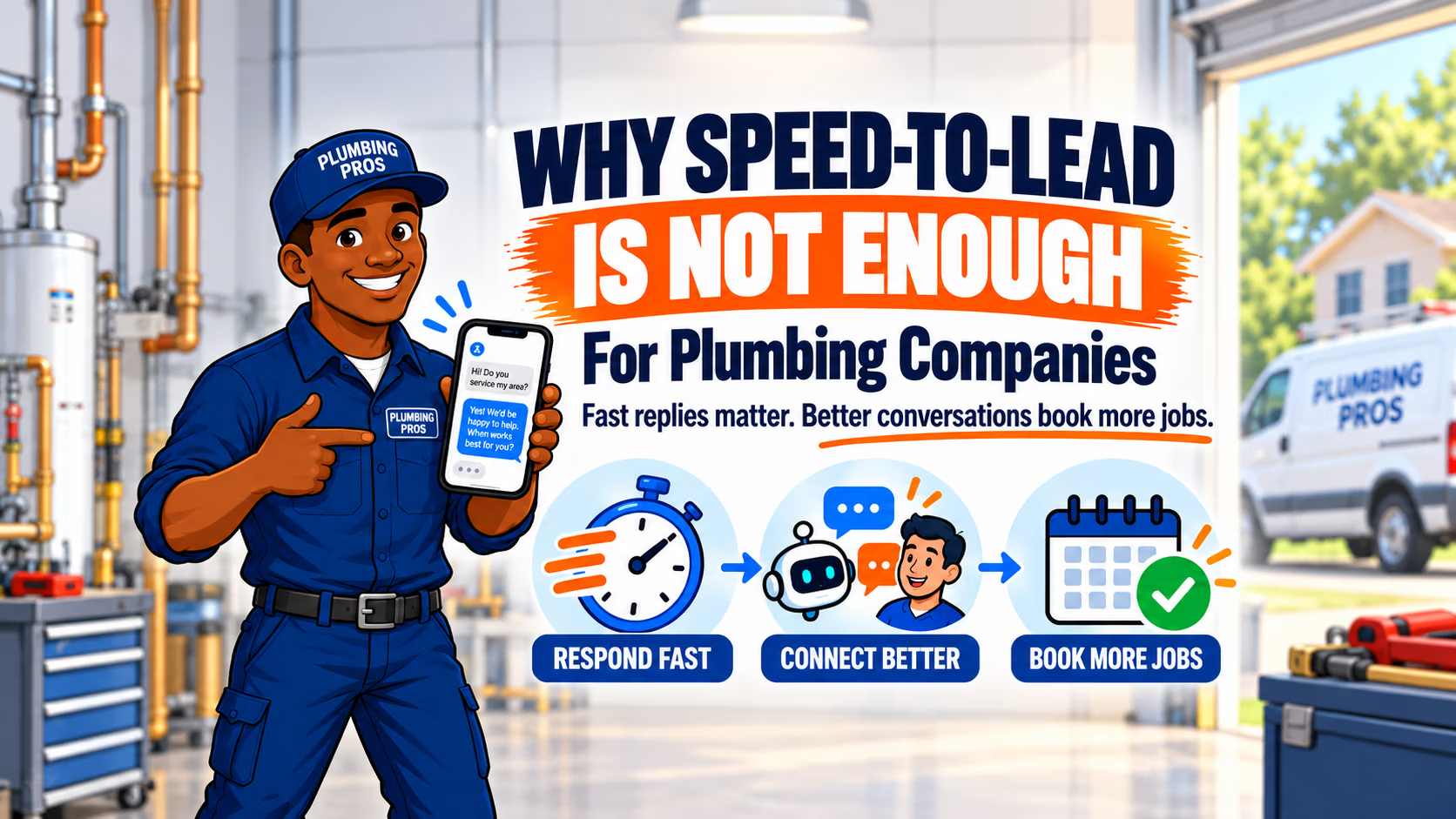
Speed Is Now the Price of Admission
How AI, empathy, and faster human connection can turn more leads into booked jobs
A few years ago, responding to a new plumbing lead within five minutes could make a company stand out.
Today, many sophisticated home service companies respond within seconds. The technology has caught up, the largest operators have adopted it, and homeowners have learned to expect an immediate reply.
That changes the competitive question.
It is no longer simply, “Who responded first?”
It is, “Who started the best conversation?”
On the Plumber Marketing Success Podcast, I spoke with Josh Lam, founder of Casey Response AI. Josh spent nine years inside Yelp and has more than 15 years of experience across sales and software development.
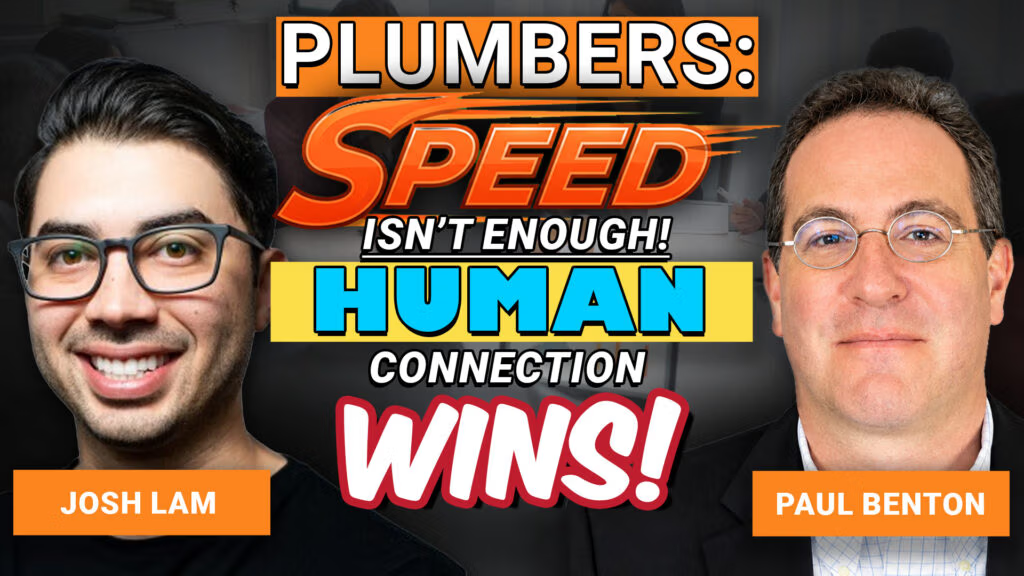
His perspective is especially useful for plumbers competing for Yelp Request a Quote leads, where several companies may receive the same opportunity at nearly the same time.
Josh’s conclusion is direct: speed-to-lead is now table stakes.
The next advantage comes from combining immediate AI-powered engagement with the empathy, judgment, and persuasion of a capable human being.
Casey’s 2026 production data reinforces that distinction. When its Instant Connect feature turned a lead into a real exchange, those leads reportedly booked about nine times more often across a full year and up to 14 times more often during a strong month than leads where the connection never landed.
Casey correctly describes this as an association, not proof that the exchange alone caused the booking. However, the results illustrate why contractors should measure real conversations and booked jobs, not merely response times.
Why Yelp Leads Feel So Competitive
Yelp’s Request a Quote experience is designed around the homeowner.
A consumer can describe a problem once and request responses from multiple local businesses. Josh explained that the default experience may send an inquiry to roughly five businesses, although the consumer can change that selection.
The homeowner may also be requesting help through Google, another directory, or a contractor’s website at the same time.
From the consumer’s perspective, this is convenient.
From the plumber’s perspective, it creates an unforgiving race.
If a lead arrives at night or during the weekend, an owner may send a rushed response from the dinner table. A late reply, a grammatical mistake, or a generic template can shape the customer’s first impression of the entire company.
The common response — “What is your phone number?” — is no longer enough.
If the homeowner wanted to begin with a phone call, they probably would have called. Forcing the person to provide a phone number before receiving any help can make the interaction feel like a sales funnel rather than a conversation.
Every Lead Platform Creates a Different Race
One of the most useful findings in Casey’s research is that the familiar five-minute rule does not apply evenly across lead sources.
Each platform creates a different customer experience and a different kind of urgency.
- Angi: Angi distributes a lead to several professionals at once, making the first meaningful response particularly important.
- Thumbtack: Thumbtack displays response time beside competing professionals, so the customer can see the delay while deciding whom to contact.
- Yelp: Yelp publishes response rate on the business profile. Casey reports that Yelp did not provide a customer phone number until April 2026 and now provides one on roughly half of leads. On the remaining leads, the business must earn the phone number through the conversation.
- Google Local Services Ads: Google LSA considers responsiveness in ranking, so a missed call can cost the immediate opportunity and potentially weaken future visibility.
- Meta lead ads: Meta leads tend to lose value quickly because the consumer submitted a form while scrolling rather than actively searching for a contractor.
- Website forms: Website forms have no public response scoreboard, which Casey says often makes them the most neglected and slowest lead source in a contractor’s mix.
Timing also varies significantly by channel.
Casey reports that approximately two-thirds of Meta lead-ad inquiries arrive outside standard business hours, compared with less than one-third of Google LSA leads.
A company that performs well on one channel but leaves three others unattended has not solved speed-to-lead. Its true response performance is determined by its slowest channel.
The New Battleground Is Conversational Quality
When every serious competitor can respond in under a minute, speed stops being the differentiator.
The words in the message become more important.
The first response should acknowledge the customer’s problem, offer something useful, and give the customer a natural reason to continue the conversation.
That does not mean the first message needs to close the job. Its purpose is to earn the next reply.
A useful response might ask one relevant question, explain what information would help, or offer a small piece of guidance.
Even when the job is not a fit, a helpful answer leaves a stronger impression than a blunt statement that the company does not provide the service.
This is where copywriting, salesmanship, and empathy meet.
The homeowner may be dealing with a leak, a failed water heater, or a toilet that cannot wait until next week. A message that communicates, “We understand the problem, and we can help you take the next step,” is more powerful than a robotic request for contact information.
Use AI to Accelerate People
Many AI systems are being positioned as replacements for customer service representatives.
Josh takes a different approach.
Casey Response AI can engage the lead, monitor the conversation, and determine when the prospect is ready for human contact. Its Instant Connect feature then alerts or connects the plumbing company’s team at the moment a human conversation is most likely to matter.
Josh divides leads into three broad groups:
- Yes
- Maybe
- No
The automatic yeses may book with almost any competent response.
The hard nos are unlikely to convert regardless of the offer.
The largest opportunity is often the maybe group — homeowners who are interested but need information, reassurance, or persuasion before choosing a contractor.
Those maybes are where an experienced CSR can outperform a fully automated voice agent.
A good representative can listen, recognize an unusual situation, explain value, ask a dispatcher for help, and create a personal connection.
AI is valuable because it can identify that opportunity and bring the human into the conversation faster.
According to Casey’s 2026 production data, leads that reached a real exchange through Instant Connect booked about nine times more often across a full year, with the difference reaching 14 times during a strong month.
These are Casey’s reported internal results, not a guarantee for every plumbing company. Businesses that engage leads promptly may differ from non-engaging businesses in other ways, so the data demonstrates a strong association rather than proof of causation.
Even with that qualification, the result illustrates why contractors should measure genuine exchanges and bookings instead of celebrating response-time metrics alone.
Train the AI Like a New Team Member
A plumbing company’s AI should not sound identical to every other business using the same platform.
Each company has different services, policies, language, pricing practices, and sales goals.
Casey addresses this through what Josh calls micro-training. A team member can review a conversation and provide a short correction or instruction. The system uses that feedback to adjust future responses.
Over time, it learns details that are specific to the business, much like a virtual assistant who becomes more capable after working with the company for months or years.
The practical lesson applies to any AI platform: do not turn it on and walk away.
Start with appropriate oversight. Review real conversations. Correct weak answers. Teach it how your best employee would respond.
The quality of the system should improve as the business gives it better feedback.
Follow Up Even If You Lose the First Race
An instant response improves the odds of engagement, but it does not end the process.
The homeowner may submit a request and immediately put the phone down. If your company did not win the first interaction, a thoughtful follow-up an hour or two later can move your message back to the top of the customer’s inbox.
Think of the inbox as a moving queue.
You want to be visible when the homeowner is ready to act. That requires both immediate engagement and a deliberate follow-up sequence.
A company that responds once and gives up is leaving paid opportunities behind.
Pay Attention to Yelp Response Quality
Yelp now evaluates more than response time. It also signals response quality.
Josh views the platform’s response-time and Excellent response-quality badges as a practical playbook. Yelp is showing businesses the behavior it wants users to experience.
Historically, a contractor might have felt forced to choose between a fast scripted reply and a slower, more thoughtful response.
AI makes it possible to pursue both.
A properly trained system can answer quickly while still giving the homeowner relevant information and a natural path toward booking.
The Pricing Question Will Not Disappear
Yelp encourages consumers to ask about pricing and availability, while many plumbing companies train their teams not to provide prices before visiting the home.
Both sides have understandable reasons.
Homeowners want useful information before inviting someone into their house. Contractors worry about quoting without enough information and being held to an inaccurate number.
Josh expects the market to move toward more digital estimates using photos, videos, and other remote tools.
The first companies to make that process reliable and convenient may create a meaningful advantage.
Even when an exact quote is impossible, plumbers should consider whether they can provide a range, explain the variables, or outline what information is needed to produce an accurate estimate.
What Plumbing Companies Should Do Next
- Measure response time in seconds, not hours or days.
- Track the percentage of leads that become real two-way exchanges, not merely the percentage that receive an automated reply.
- Audit the actual first message sent through Yelp and every other lead source.
- Replace generic phone-number requests with helpful, conversational openings.
- Build a follow-up sequence for prospects who do not respond immediately.
- Use AI to identify and accelerate valuable human conversations.
- Train the system continuously using feedback from real interactions.
- Track booking rate and platform quality signals, not response speed alone.
- Inspect the quietest channel first — often the company’s website form — because it has no public platform metric calling attention to delays.
Speed still matters. A plumber who waits until the next day may never be considered.
But speed is now the beginning of the sales process, not the end.
The companies that win will respond immediately, communicate like people, and make it easier for the homeowner to connect with someone who can solve the problem.
Frequently Asked Questions
How quickly should a plumber respond to a Yelp lead?
Within seconds whenever possible. Homeowners may receive responses from several businesses almost immediately, so a delay of even a few minutes can reduce the chance of engagement.
Is the first company to respond always the company that wins?
No. Speed increases visibility, but the relevance and tone of the message influence whether the homeowner replies. Follow-up also gives later responders another opportunity to earn the conversation.
Should plumbers use AI to answer every phone call?
Not necessarily. AI can handle immediate engagement, qualification, and routine interactions, but skilled humans remain valuable for prospects who need an explanation, reassurance, or persuasion.
What should the first Yelp response say?
It should acknowledge the customer’s request, offer something useful, and ask a relevant question that advances the conversation. Avoid making the message feel like a barrier designed only to capture a phone number.
Why does Yelp response quality matter?
Yelp’s response-quality signal indicates the kind of interaction the platform wants customers to receive. Better conversations can also produce more engagement, giving plumbers a stronger opportunity to book the job.
Do all plumbing lead sources require the same follow-up process?
No. Angi, Thumbtack, Yelp, Google LSA, Meta, and website forms create different levels of urgency and provide different contact information.
The response process should reflect the platform, the customer’s intent, and the time the lead arrived.
Listen to the Full Conversation
Listen to the Plumber Marketing Success Podcast interview with Josh Lam for the complete discussion about Yelp, speed-to-lead, conversational AI, Instant Connect, response-quality badges, and the future of AI agents in home services.
Connect with Josh: https://www.linkedin.com/in/joshuaglam/
Connect with Paul: https://www.linkedin.com/in/paul-benton/
Research referenced: Why Replying Fast Is Not the Same as Connecting