
A pilot’s lesson for business owners
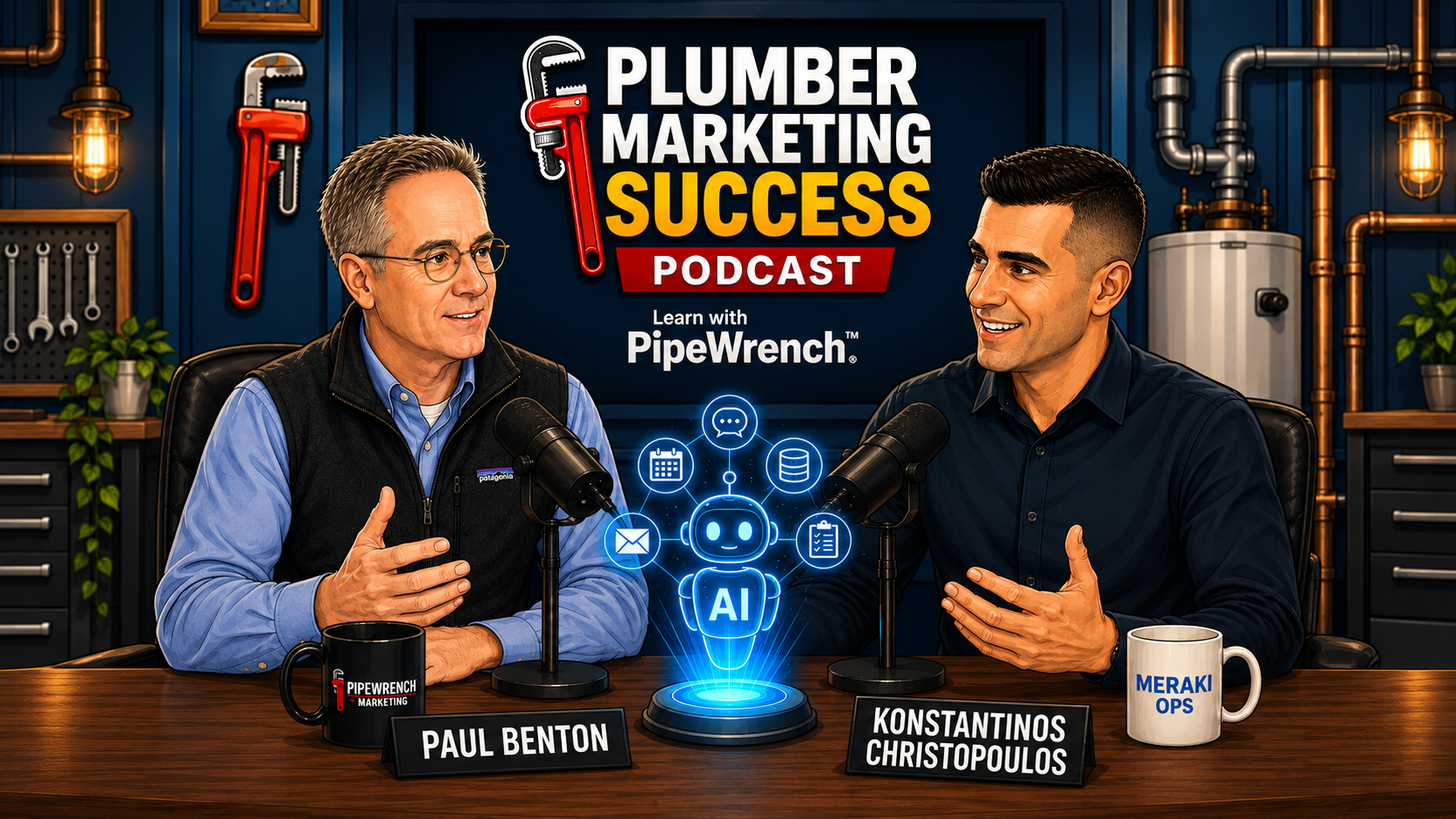
When Konstantinos Christopoulos first flew an aircraft solo, he was 18 and had not yet driven a car. His early training in the Hellenic Air Force began with a deliberately manual aircraft. Before a pilot could rely on more advanced systems, he had to understand the basics and learn how the process worked.
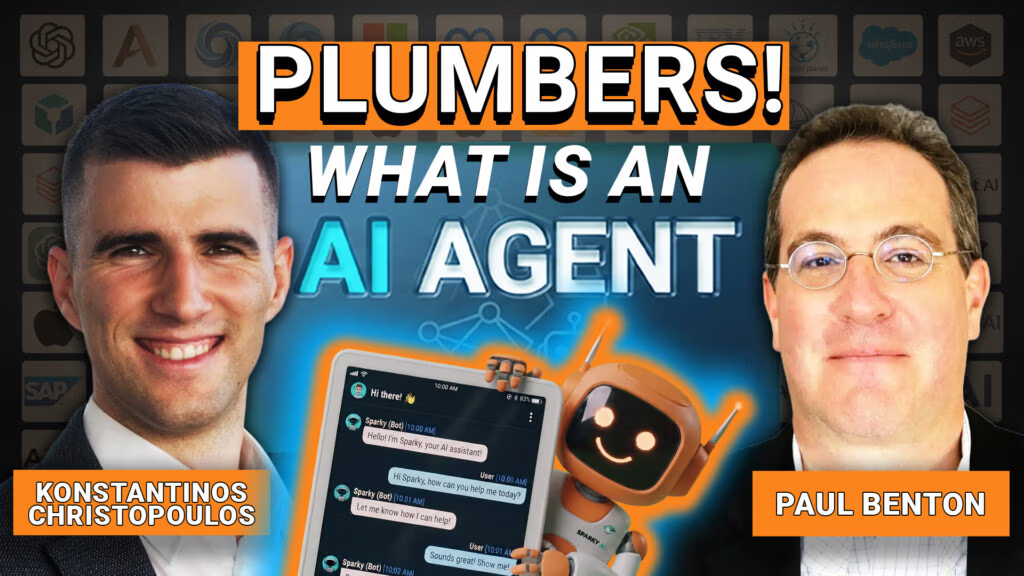
That lesson stayed with him after eight years in the Air Force and into his work helping businesses use automation and artificial intelligence. It also offers a useful starting point for plumbing company owners who are curious about AI: understand the work before you automate it.
Learn the manual process first
A business process is the sequence of steps people follow to get a result. A new customer inquiry might arrive through a website form, get entered into a CRM, trigger a notification, and then wait for someone to respond. A team member may also copy details into another system, create a follow-up task, or send an appointment confirmation.
If the process is unclear or inconsistent, adding automation can make the confusion happen faster. Konstantinos described learning the manual way as a necessary foundation: first understand what happens, who does it, and where information goes. Then decide which parts can be handled by a predictable workflow and where judgment still matters.
For a plumbing company, that could mean mapping the path from a new call or web inquiry to a scheduled service visit. Who sees the request? How quickly is it assigned? What information must be collected? When does someone follow up? A simple written process can expose missed handoffs before any software is involved.
Look for recurring work with a real cost
When Konstantinos evaluates a business, he asks the owner what takes the most time and which tasks are repetitive. He often sees data entry and other straightforward manual work taking hours from a team. Those tasks can be candidates for automation because they recur and follow recognizable steps.
Frequency matters. Automating a task that happens once a month may be less valuable than improving a small task that happens dozens of times each day. The better first question is not, ‘What can AI do?’ It is, ‘Where are we spending time on work that follows the same pattern again and again?’
A lead form could trigger a CRM entry and a task for a team member to respond. Add a confirmation or alert only if it solves a defined problem. The goal is a more reliable process, not automation for its own sake.
Know the difference between automation and an AI agent
A traditional automation follows rules. If a form is submitted, then add a contact record. If a task is overdue, then send a reminder. When the conditions are clear, this kind of workflow can be dependable and relatively simple to test.
An AI agent can work with tools and carry out a sequence of actions toward a goal. That flexibility can be valuable, but it also creates more ways for the system to misunderstand information or take an incorrect action. A routine notification and an agent that reads messages across multiple platforms, identifies urgent issues, and responds are very different projects.
That distinction helps owners choose the right level of technology. If a task is predictable, a straightforward workflow may be enough. If it requires interpreting unstructured information, AI may help, but the business needs safeguards, testing, and a clear boundary around what the system can do without human review.
Keep people responsible for judgment
Konstantinos warned against expecting AI to make strategic decisions for a company, such as choosing its direction or deciding which marketing channel will produce more sales. AI can support people by organizing information and reducing repetitive work, but the owner still needs to set goals and make business decisions.
That caution is especially relevant when a workflow touches customers, schedules, pricing, or sensitive information. Start with a task where a mistake is easy to catch and correct. Review the results. Decide what needs a human approval step. Expand only after the process performs consistently.
Choose a first project you can measure
A useful pilot should have a clear starting point, a repeatable process, and a result the owner can measure. Before changing anything, write down how the task works today. Estimate how often it happens and how much staff time it takes. Then define what better performance would look like: fewer manual entries, faster assignment, fewer missed follow-ups, or less time spent searching for information.
Test the smallest version with a limited set of cases. Check the output and ask employees whether it helps. Fix problems before expanding; a pilot is for learning safely.
Project size and timing vary. Konstantinos noted that a simple form-based automation may take a week or two, while a system that monitors many platforms and must avoid mistakes needs more design and testing. The timeline depends on the task, integrations, and risk.
Start with a better question
Plumbing businesses do not need to chase every new AI tool. They need to notice where skilled employees are spending their days repeating steps, moving information, or keeping a process from falling through the cracks. Then they can decide whether a written procedure, a basic workflow, or an AI-supported system is the right fit.
Konstantinos’s Air Force background points to a grounded principle: learn the process before relying on technology to run it. For an owner, that can start with a short conversation with the team. What work takes too long? Which steps repeat? Where do handoffs break down? What should always receive a person’s review?
Those answers are more valuable than a long list of AI tools. Start there, select one recurring problem, and measure whether the solution improves the work. The first step toward useful AI may be surprisingly low-tech: understand what your people are doing, and decide which parts they should no longer have to do by hand.