
Strong plumbing business systems help you improve profitability, give your team clear responsibilities, and build a company that can operate without you.
An $8 million plumbing and home-services company should be worth a lot. But when Juan Carlos Velasco tried to sell the multi-trade business he had built with his brother, the first offer was $1 for the assets, plus a job running the company.
The buyer wasn’t saying the company had no revenue. Juan Carlos’s business had 26 employees, 13 trucks, and about $8 million in annual revenue. The problem was that too much of its value depended on Juan Carlos himself.
As the buyer put it, what could be measured on paper was what mattered. If Juan Carlos left, the business wouldn’t operate the same way.
That distinction is easy to miss when you’re busy running a plumbing company. You can have a full schedule, a strong reputation, and a healthy flow of work while still being the person every decision depends on. That may make you a great operator. It can also make the business hard to grow, step away from, or sell.
Juan Carlos went back to school for an MBA in finance, rebuilt the company around systems and people, and eventually sold it to Comfort Systems USA. Today, through Scale My Profits, he helps home-service owners build companies that are more profitable and less dependent on the owner.

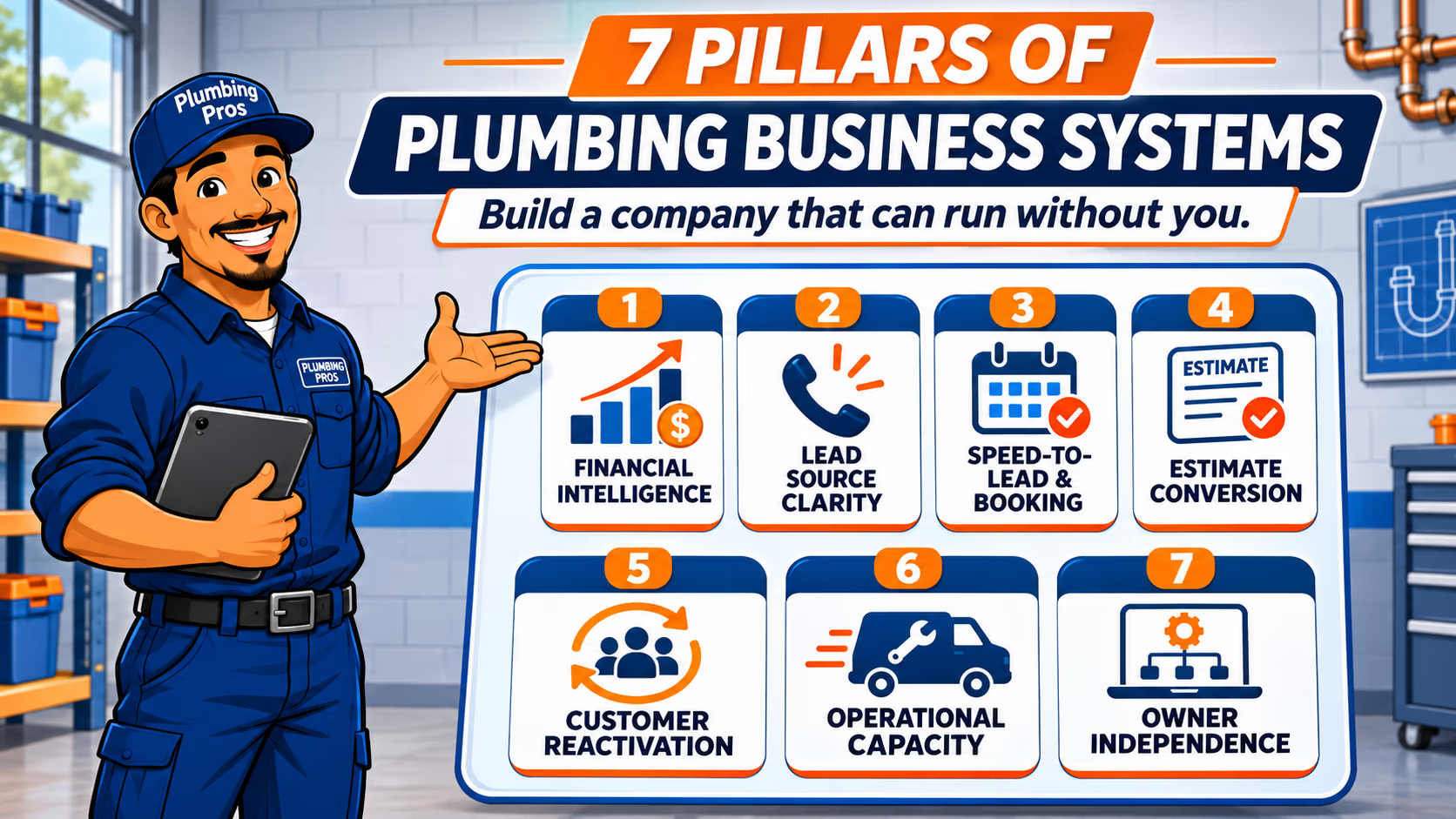
His framework is built around seven pillars.
7 Pillars of Effective Plumbing Business Systems
- Financial intelligence
- Lead source clarity
- Speed-to-lead and booking
- Estimate conversion
- Customer reactivation
- Operational capacity
- Owner independence and exit-ready systems
They work together. The first six help an owner understand and improve how the business earns money. The seventh asks whether the company can keep working well without the owner personally managing every detail.
1. Financial intelligence: Know what each job really earns
Many owners know their revenue and may know their overall net margin. Fewer can answer what it costs to complete a particular type of job, run a truck, or keep a technician productive.
A technician’s wage is only one part of the cost. A company also has payroll taxes, insurance, vehicles, office staff, rent, and other overhead. If the estimate doesn’t account for the true cost of operating the business, a job can look profitable while quietly losing money.
Juan Carlos described a company that believed its operating cost was about $149 per hour. After calculating the actual cost, the number was closer to $350. That gap changed what the company needed to charge to make the work worthwhile.
Financial intelligence doesn’t mean every owner needs to become an accountant. It means having reliable numbers and asking the right questions: What does this job type contribute? What does it cost to keep each truck operating? Which departments or services are producing a healthy margin?
2. Lead source clarity: Know which marketing brings profitable work
When the phone isn’t ringing, the first instinct is often to buy more leads. But more leads won’t fix a business that can’t tell where its best customers come from—or what happens after they call.
Lead tracking should connect marketing activity to booked work and revenue. Cost per lead matters, but it doesn’t tell the whole story. A channel with inexpensive leads may perform poorly if those leads don’t book or buy. A more expensive source may be worthwhile if it produces larger or more profitable jobs.
Clear attribution helps owners and marketers make better decisions. It shows which sources are contributing to revenue and where the business may be losing potential customers after the first contact.
3. Speed-to-lead and booking: Respond while the customer is ready
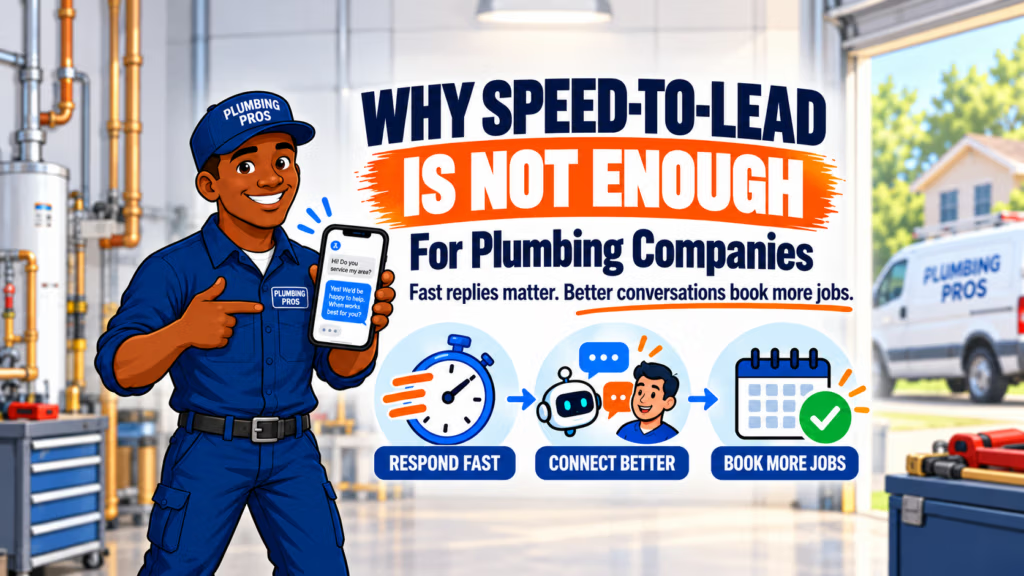
When a homeowner needs a plumber, they may contact several companies in a short period of time. The business that answers, responds quickly, and makes it easy to book has an advantage.
That requires more than telling staff to “answer faster.” Owners need to understand response times, call handling, and booking rates. They also need coverage during the hours when their team is busy or unavailable.
Juan Carlos discussed an analysis of call activity that showed a spike in missed opportunities around 4 p.m. The practical lesson is to study your own call patterns. When are calls missed? Which calls turn into appointments? Where does the booking process break down?
4. Estimate conversion: Follow up on the work you already quoted
A quote is not the same as a closed job. Many service companies send an estimate and wait for the customer to make the next move. That leaves a substantial amount of potential work without a clear follow-up process.
Start by organizing estimates by age. Recent estimates may be more likely to turn into booked jobs than older ones, so they should not all receive the same follow-up. Juan Carlos recommends separating estimates into groups, such as under 30 days, 30 to 90 days, and over 90 days.
In the example discussed on the podcast, Juan Carlos estimated that structured follow-up might close 15% to 30% of $100,000 in open estimates. That is an estimate based on the scenario, not a guaranteed outcome. The broader point is that open estimates deserve active attention, clear ownership, and an actual conversation with the customer.
5. Customer reactivation: Stay in touch after the first job
Past customers already know your company. Yet many businesses make little effort to reconnect after the original job is complete.
A useful reactivation plan can include seasonal reminders, service check-ins, maintenance offers, or membership options. The goal is to stay relevant and make it easy for customers to choose you again.
Juan Carlos discussed the value of contacting past customers with a planned sequence instead of a single message. Even a modest response can create meaningful work, especially when the company offers a useful next step and trains its team to explain membership or maintenance options.
6. Operational capacity: Make the trucks and schedule work better
Growth depends on capacity. An owner needs to understand how effectively the team uses available time, how dispatch decisions affect the day, and how much revenue each truck produces.
Adding more leads without sufficient capacity can create delays and missed opportunities. On the other hand, an inefficient schedule can leave a team underused even when demand is strong.
Look at the measures that show how work moves through the business: scheduling, dispatch, cancellations, no-shows, and revenue per truck. Planning ahead also matters. Juan Carlos recommends looking several quarters out so that owners can prepare for seasonality, staffing, and capacity needs before they become urgent.
7. Owner independence: Build a company that doesn’t rely on your memory
The final pillar is the test of the first six: can the business make good decisions without the owner handling every exception?
That takes more than hiring a manager or buying software. The company needs clear responsibilities, documented processes, and decision-making rules people can use. Employees should know which decisions they own and which situations truly need the owner’s attention.
Juan Carlos suggests testing the systems by stepping away for an extended period—around six weeks or 60 days—and seeing what happens. If every issue still comes back to you, that’s useful information. It shows where the company needs stronger processes, authority, or training.
Build a business that’s worth more than its revenue
The $1 offer was a painful lesson for Juan Carlos, but it gave him a new way to think about business value. Revenue can show that a company is busy. Transferable systems show that it can keep producing without one person holding it together.
For plumbing owners, the work begins with understanding the numbers, tracking the customer journey, and creating reliable ways to book, sell, and deliver jobs. Over time, those systems can give the team more responsibility and give the owner more choices.
Juan Carlos’s story is a reminder that building a company and building an asset are related, but they are not the same task.
Start strengthening your plumbing business systems by choosing one pillar, assigning responsibility, and measuring progress.
Take the free Owner Dependency Test:
https://scalemyprofits.com/owner-dependency-score/
About Juan Carlos Velasco
Juan Carlos is the founder of Scale My Profits and a former home-services business owner. After building, systemizing, and selling his company, he now helps plumbing, HVAC, electrical, and other home-service owners strengthen their businesses.
Website: https://scalemyprofits.com/
LinkedIn: https://www.linkedin.com/in/Juancarlosvelasco/
About the author
Paul Benton is the founder of PipeWrench Marketing, a marketing agency focused on helping family-owned plumbing companies grow. He is also CEO of The Light Digital and host of the Plumber Marketing Success Podcast.
PipeWrench Marketing: https://pipewrenchmarketing.com/
LinkedIn: https://www.linkedin.com/in/paul-benton/