

Speed-to-lead has become a rallying cry in home service marketing.
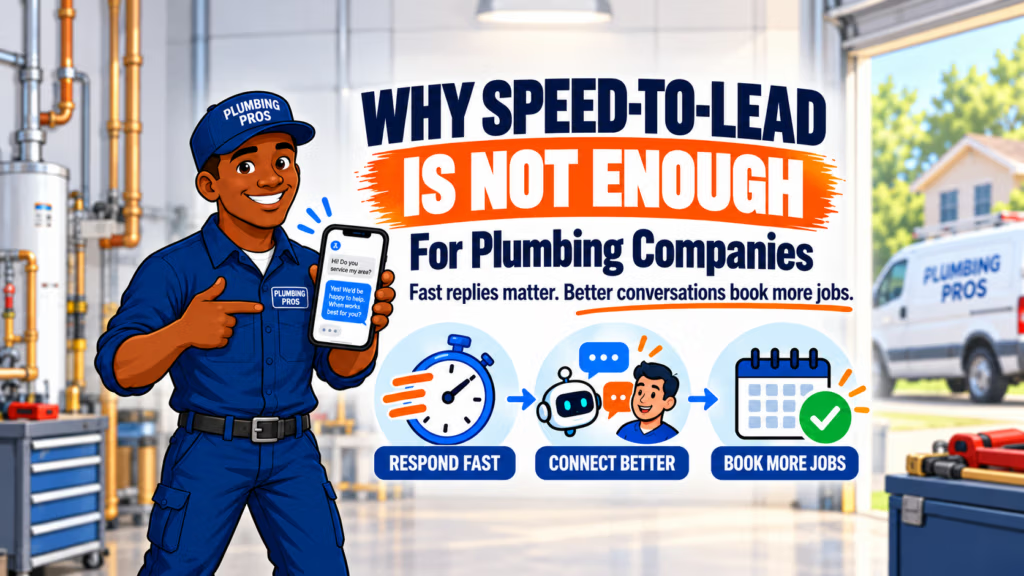
The idea is simple: when a homeowner submits a request, the first plumbing company to respond has the best chance of winning the job. That has encouraged contractors to invest in automated text messages, rapid call centers, AI receptionists, and increasingly sophisticated lead-response systems.
There is only one problem.
When every company responds immediately and says essentially the same thing, speed stops being a meaningful advantage.
Live video for plumbers offers a way to move beyond automated replies, connect with homeowners, and qualify jobs before sending a truck.
I recently experienced this while looking for someone to replace a toilet in my home. I submitted a request through Yelp and received responses from four plumbing companies within about a minute. From a speed-to-lead perspective, they all performed exceptionally well.
But every response led to the same question: “When can we come to your house and give you an estimate?”
Some companies charged for the visit, while others offered a free estimate. But none created a meaningful relationship. Getting someone on the phone was surprisingly difficult. After the contractors visited and submitted their proposals, not one called me to discuss the estimate or ask for the business.
They responded quickly, but they never sold.
My conversation with James Hatfield, co-founder of LiveSwitch and president of LiveSwitch Ambassadors, introduced a better way to think about this challenge.
James calls it “race-to-face.”

Speed-to-Lead Is No Longer Enough
According to James, people still buy from people. AI can help a plumbing company respond faster, organize information, and prepare estimates, but it cannot replace the trust created through a real human interaction.
Race to face takes speed to lead one important step further.
When a customer calls, the contractor can say, “Would you mind if I send you a text? Tap the link and show me what is happening.”
The customer does not need to download an app, create an account, or understand complicated technology. The link opens a live video connection. Within seconds, the contractor can see the customer, inspect the problem, ask questions, and begin establishing trust.
While competing plumbers are trying to schedule an estimate for Wednesday, you are already inside the customer’s home virtually.
That creates a different kind of advantage. You are no longer simply the first company to respond. You are the first company to understand the problem and form a human connection.
How Live Video for Plumbers Reduces Unnecessary Truck Rolls
Free estimates are not free for the contractor.
Every onsite estimate consumes labor, fuel, vehicle capacity, and time. A technician or salesperson may spend an hour driving across town, only to discover a small job, an unqualified customer, or someone collecting five estimates before choosing the lowest price.
Live video gives contractors a way to evaluate the opportunity before making that investment.
A virtual consultation can help determine:
- Whether the situation is a minor leak or a genuine emergency
- Whether the job falls within the company’s preferred scope
- Whether a ballpark price can be provided remotely
- Whether the homeowner appears ready to proceed
- Whether an onsite inspection is truly necessary
- Whether the job is worth sending a truck
The objective is not to eliminate every onsite visit. Some projects are too complicated to estimate remotely. Others require measurements, testing, or a closer physical inspection.
The objective is to make better decisions about which visits are worth making.
For a straightforward toilet replacement, the plumber may be able to review the existing toilet, inspect the space, discuss options, and provide an estimate without leaving the office. For a complicated repipe or commercial project, video may simply serve as the first qualification step before an onsite visit.
In both cases, the contractor knows more before dispatching a technician.
Can Virtual Estimates Really Convert?
Many contractors believe they need to cross the homeowner’s physical threshold before they can make a sale.
James challenges that assumption.
He says a virtual close rate of approximately 48% is realistic across certain markets and types of work. He also shared the example of a contractor who closely tracks his performance. That contractor reported closing approximately 60% of onsite opportunities and 62% of virtual opportunities.
The virtual closing rate was not lower. It was slightly higher.
Even if virtual and onsite close rates were identical, virtual estimates could still be more profitable. The contractor would avoid paying someone to drive to the opportunities that do not close.
James also shared the story of a solo contractor who installs televisions and speakers. After adopting virtual estimates, the contractor said he gained approximately two additional hours with his young daughter every day because he no longer spent that time driving around town.
That is more than operational efficiency. It is a meaningful quality-of-life improvement.
Estimating Is Not the Same as Selling
One of the most important ideas in my conversation with James was the distinction between preparing an estimate and making a sale.
Many plumbing companies have become efficient at generating proposals. A technician inspects the problem, enters the information into software, and sends the customer a polished PDF.
But then what?
Too often, no one calls the customer. No one walks through the recommendation. No one asks what matters most to the homeowner. No one explains why one option costs more than another. No one answers objections or asks for the sale.
The proposal becomes a commodity that the homeowner can compare against four other PDFs.
That is exactly what I did with my toilet estimates. I uploaded the proposals into ChatGPT and asked it to help me compare them. Because the contractors had not created meaningful relationships, the decision became an exercise in comparing price, equipment, and terms.
Live video gives the salesperson a better opportunity.
A contractor can reconnect with the homeowner, share the proposal on screen, explain the scope, answer questions, and discuss the differences between the available options. That conversation can also be recorded and shared with a spouse, partner, or other decision-maker.
If your competitors send an estimate and disappear, simply following up face-to-face can become a powerful competitive advantage.
AI Should Be the Copilot, Not the Plumber
LiveSwitch combines video with AI to help contractors collect information and prepare estimates.
A plumber can record the project while describing the work. The AI can analyze the video, organize the observations, incorporate pricing information, and help generate a customer-ready proposal.
Video provides information that a voice recording alone may miss. As James put it, a picture may be worth a thousand words, but a video is worth ten thousand.
The system may notice conditions visible in the recording that the plumber did not explicitly mention. It can also create documentation showing the condition of the property before work begins, which may help resolve disputes about preexisting damage.
However, James offers an important warning: never blindly trust AI.
He compares the technology to an Iron Man suit. The suit makes the expert more powerful, but it still needs Tony Stark.
A qualified person must review the output, correct mistakes, and approve the final estimate. The technology should handle repetitive work and help organize information. The contractor remains responsible for the diagnosis, recommendation, and customer relationship.
Professional Presentation Can Support Higher Prices
During the interview, James told a story about a contractor who wrote an estimate in blue ink on an envelope.
James recorded a short video explaining the project, ran the information through AI, and quickly produced a professional, customer-ready proposal. He then compared the polished proposal with the handwritten envelope.
Which contractor appeared more organized, trustworthy, and valuable?
Customers do not evaluate price in isolation. Presentation shapes their perception of quality. A clear proposal that explains the work can create more confidence than a number scribbled on an envelope.
Technology does not have to make the sales experience less human. Used correctly, it handles the administrative work so the contractor has more time to communicate, consult, and sell.
Turn Installed Equipment Into a Direct Connection
One of the most interesting LiveSwitch applications involves QR codes.
A contractor can place a branded QR code on a water heater, near a toilet, or on another piece of installed equipment. If the homeowner experiences a future problem, they scan the code and submit a video.
Instead of searching Google for a plumber, the customer returns directly to the company that performed the original work.
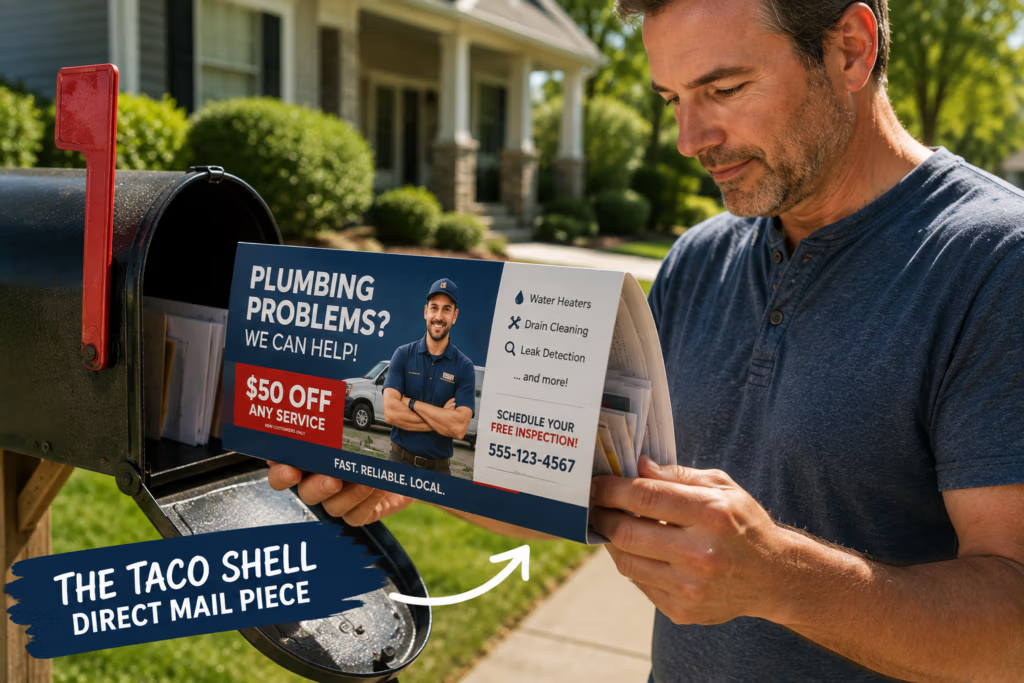
The same concept can be used in direct mail. Imagine sending homeowners a flyer offering a discount on a household repair. The homeowner scans a QR code, follows guided instructions, and records the leaking fixture, unusual noise, or other problem.
The contractor can review the video, determine whether the opportunity is a good fit, and respond with useful information.
A traditional marketing piece has now become an interactive lead-generation tool.
The Future of Home Service Sales Is Human and AI Assisted
James believes AI, real-time video, wearables, automated material ordering, and even robotic delivery will continue changing the trades.
But the immediate opportunity is much simpler.
Move the phone approximately 12 inches from your ear to the front of your face.
Get face-to-face with the customer. See the problem. Ask better questions. Decide whether the opportunity warrants a visit. Use AI to organize the information, but use a human being to build trust and make the sale.
Plumbers do not necessarily need more leads. Many need to convert more of the opportunities they already receive.
Speed to lead helped contractors respond faster. Race to face may help them become the company the customer actually remembers, trusts, and hires.
Frequently Asked Questions
What is LiveSwitch?
LiveSwitch is a live-video and AI platform that helps home service companies conduct virtual consultations, qualify opportunities, document projects, prepare estimates, and follow up with customers.
Does the homeowner need to download an app?
No. The contractor can send a text message containing a link. The homeowner taps it to begin the video session without downloading an app.
Can every plumbing job be estimated virtually?
No. Straightforward projects may be estimated remotely, while complicated work may still require an onsite inspection. Video helps the contractor decide which approach is appropriate.
Does LiveSwitch integrate with other home service platforms?
According to James, LiveSwitch integrates with ServiceTitan, Housecall Pro, and Jobber, allowing contractors to access video capabilities through systems they already use.
Will AI replace plumbing salespeople or technicians?
No. AI can analyze information, assist with documentation, and help prepare proposals, but it cannot replace the physical work of a plumber or the trust created through effective human communication.
Learn more about LiveSwitch at https://www.liveswitch.com/.