
Most plumbing company owners don’t have a lead problem.
They have an operational problem.
At PipeWrench Marketing, we spend every day helping plumbing companies generate more calls through Google Maps, Local Services Ads, paid advertising, AI, and other digital marketing strategies. But one thing has become abundantly clear over the years:
Generating more leads only helps if your business has the systems to convert those opportunities into profitable jobs.
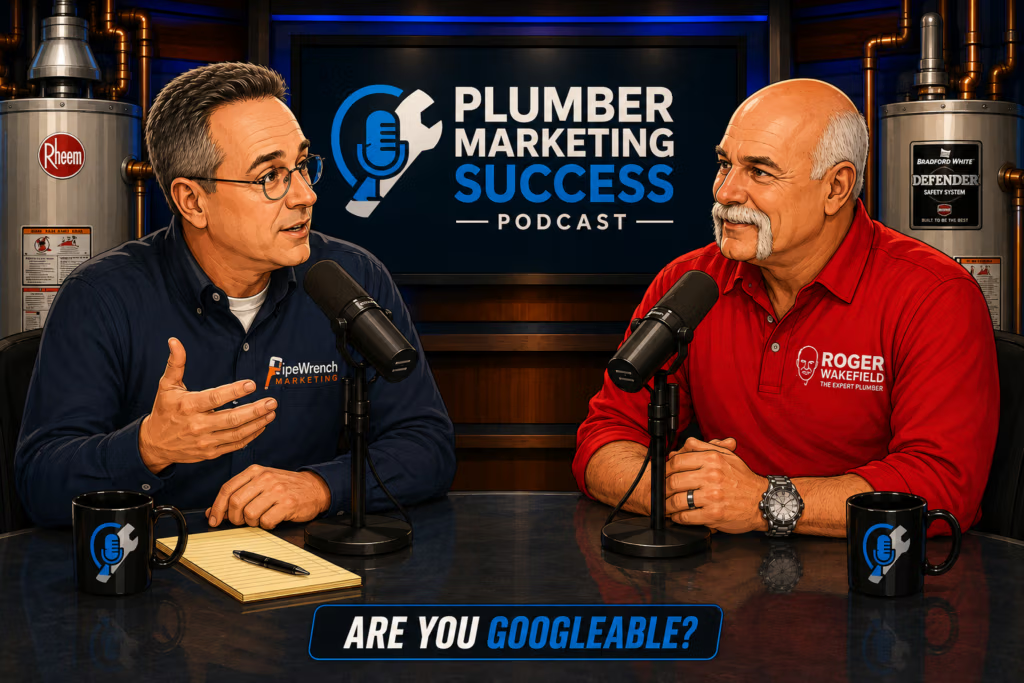
That’s why I was excited to sit down with Jim Lusardi, a business process consultant who has spent more than twenty years helping home service companies improve operations, accountability, and profitability.

During our conversation on the Plumber Marketing Success Podcast, Jim shared the five key performance indicators every plumbing company owner should monitor. What I appreciated most was that Jim doesn’t believe in drowning owners in reports.
As he put it:
“Owners don’t need dozens of KPIs. They need a handful that tells them whether the business is healthy.”
He’s exactly right.
Here are the five numbers every plumbing company should be watching.
1. Customer Satisfaction (CSAT)
Most contractors think online reviews tell them everything they need to know.
They don’t.
Jim made an important distinction between Google Reviews and Customer Satisfaction (CSAT).
Google Reviews build your reputation. They help future customers decide whether to call your company.
CSAT helps you improve your business.
A simple survey sent after every completed job can uncover operational issues long before they become one-star reviews. Maybe customers consistently mention poor communication. Maybe one technician receives dramatically better feedback than everyone else. Maybe customers love the workmanship but feel surprised by billing.
Those patterns rarely appear clearly in public reviews.
Jim recommends keeping surveys extremely short. Customers don’t want to answer twenty questions. Three thoughtful questions are often enough to reveal where improvements should be made.
The goal isn’t chasing a perfect score.
The goal is continuous improvement.
2. Speed to Lead
This is where marketing and operations collide.
From my perspective as a marketer, speed-to-lead is one of the biggest competitive advantages available today.
Customers no longer call one plumber and patiently wait.
They contact several companies at once.
The first business that responds usually wins.
Jim agreed completely.
His advice was simple:
Respond within minutes during business hours.
If your office waits thirty minutes—or worse, several hours—you are often handing revenue directly to your competitors.
The encouraging news is that technology has made this much easier.
AI answering systems, automated text responses, intelligent scheduling software, CRM workflows, and instant notifications allow companies to engage customers almost immediately while keeping office staff focused on higher-value conversations.
Jim doesn’t see AI replacing employees.
He sees it making good employees dramatically more effective.
That’s exactly how we view it at PipeWrench.
3. Revenue Per Truck
Many owners celebrate revenue growth without asking an important question:
Did we actually become more efficient?
Revenue per truck answers that question.
Instead of simply measuring total sales, this KPI measures how effectively each truck generates revenue.
Improving this number often requires operational improvements rather than additional marketing.
Examples include:
- Better scheduling
- Improved dispatching
- Reducing drive time
- Making sure technicians have the correct inventory before leaving the shop
- Confirming appointments
- Reducing downtime between calls
Jim pointed out that a short morning meeting reviewing every scheduled job can eliminate many costly mistakes before the first truck leaves the parking lot.
Missing one fitting or making one unnecessary trip to the supply house may seem insignificant.
Across hundreds of jobs, those small inefficiencies become very expensive.
4. Accounts Receivable
Revenue is important.
Cash flow keeps businesses alive.
Jim emphasized something many contractors overlook:
Revenue doesn’t pay payroll. Cash does.
One of the biggest operational failures he encounters is unclear ownership.
Everyone assumes someone else is collecting overdue invoices.
As a result, invoices go out late.
Collections never happen.
Cash flow suffers.
His recommendations are refreshingly practical.
Collect payment as quickly as possible.
Whenever appropriate, keep a credit card securely on file.
Automate invoice delivery immediately after work is completed.
Review aging reports every week instead of every month.
Small improvements in accounts receivable often have a much larger impact on business health than increasing sales.
5. Callback Rate
Few metrics expose operational weaknesses faster than callback rate.
A callback represents work that should have been completed correctly the first time.
Many owners immediately blame technicians.
Jim takes a different approach.
He starts by asking one question:
Why?
Is additional technician training needed?
Was communication poor?
Was the technician missing parts?
Did dispatch misunderstand the scope of work?
Was the customer expecting something different?
Rather than focusing on blame, Jim uses callback data to identify weaknesses in the system.
That’s an approach every growing plumbing company can benefit from.
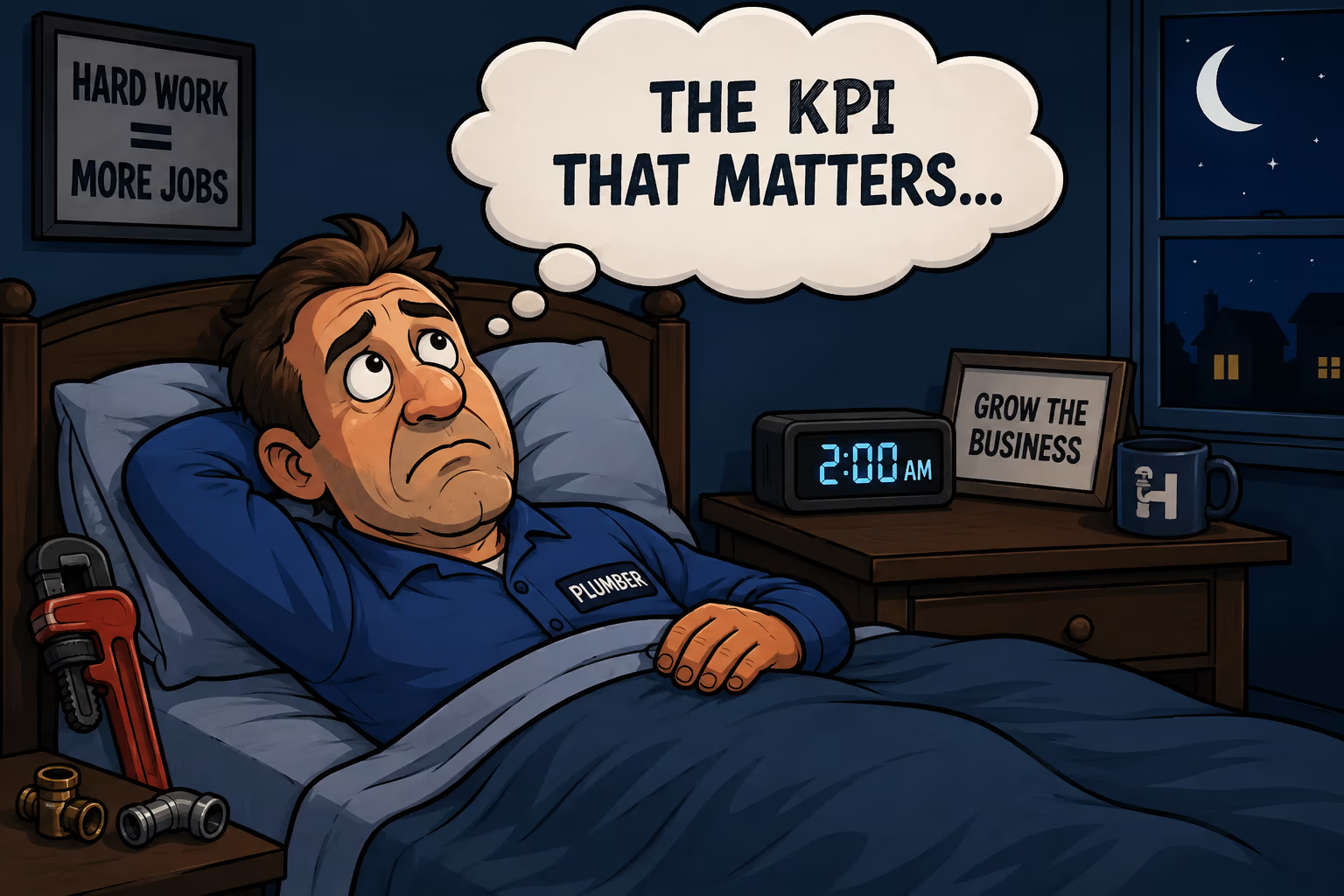
The KPI Jim Thinks About at 3:00 A.M.
Toward the end of our conversation, I asked Jim one final question.
If a plumbing owner wakes up at three o’clock in the morning worrying about one number, what should it be?
His answer surprised me.
Not revenue.
Not profit.
Not customer satisfaction.
His answer was:
Quote Turnaround Time.
The faster customers receive accurate quotes, the faster they make decisions.
Faster quotes increase close rates.
Higher close rates improve truck utilization.
Better truck utilization improves cash flow.
Everything begins to improve.
It’s a reminder that many operational improvements create a ripple effect throughout the entire business.
Marketing Can Only Take You So Far
One theme kept resurfacing throughout our conversation.
Marketing and operations cannot be separated.
A great marketing campaign fills the pipeline.
Operations determine what happens next.
If calls aren’t answered quickly…
If quotes are delayed…
If technicians return repeatedly to fix the same jobs…
If invoices sit unpaid…
Even the best marketing eventually hits a ceiling.
The highest-performing plumbing companies understand this relationship.
They invest in both generating opportunities and building systems that consistently convert those opportunities into profitable customers.
That’s where sustainable growth comes from.
Final Thoughts
Every plumbing company tracks numbers.
The best plumbing companies track the right numbers.
Jim Lusardi’s framework is refreshingly simple.
Focus on customer satisfaction.
Respond faster than your competitors.
Improve revenue per truck.
Protect cash flow.
Reduce callbacks.
Master those five areas, and you’ll have a far clearer picture of the health of your business than dozens of dashboards ever could.
If you’d like more conversations like this with successful contractors, business leaders, and technology experts, subscribe to the Plumber Marketing Success Podcast.
And if you’re looking for help generating more calls, booking more jobs, and building a more profitable plumbing company, we’d love to talk.
At PipeWrench Marketing, we help plumbing companies grow through proven digital marketing, Google Maps optimization, Local Services Ads, AI, websites, and technologies built specifically for the plumbing industry.